Lifestyle Upgrade!

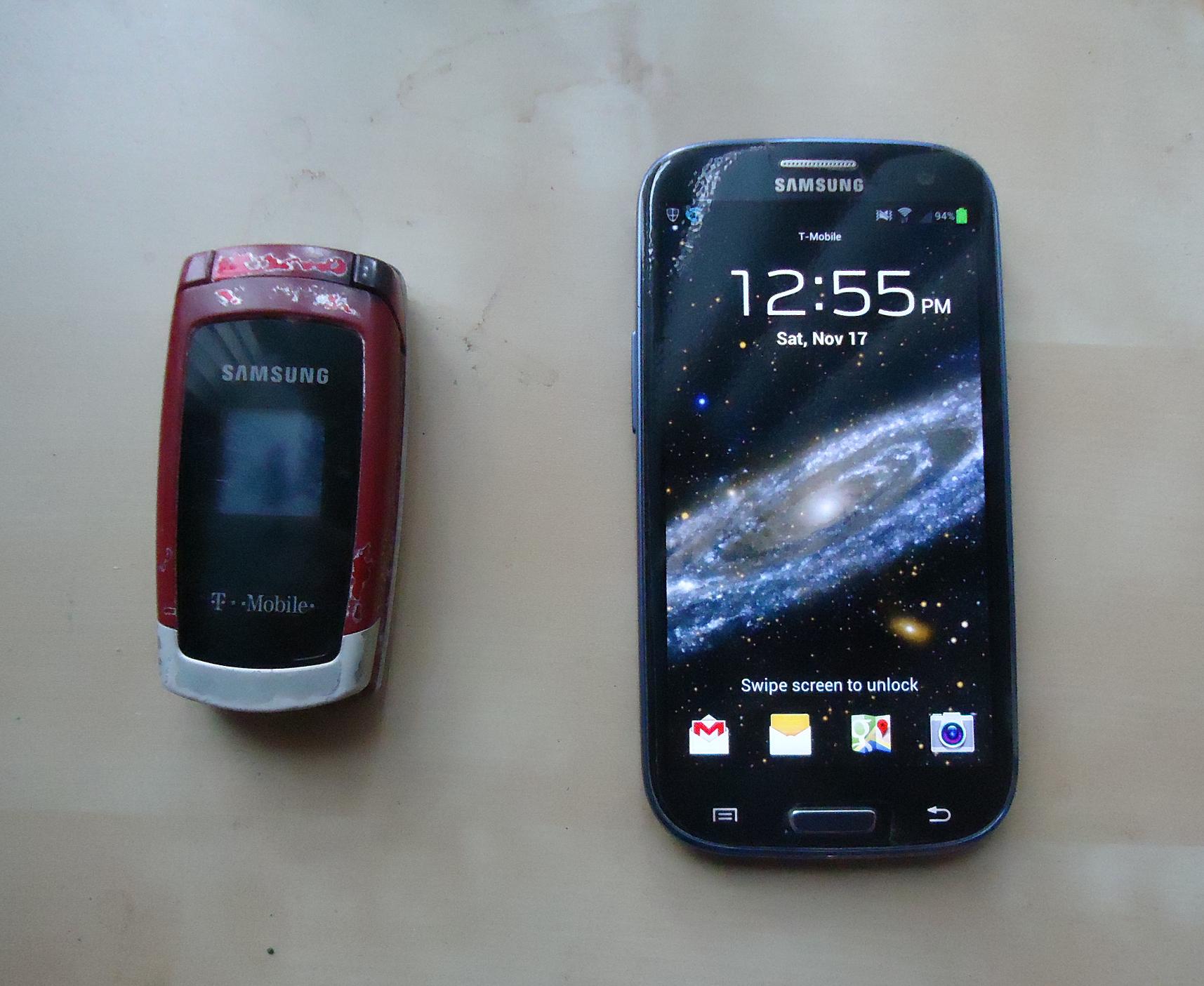
Well this actually happened in August 2012, but I think it’s about time to do a side-by-side comparison.  Getting a new phone might have been the biggest technology leap I’ve taken yet.

In the red trunks, released early 2007, weighing in at 79g, with 800 mAh battery, display resolution of 128×160 pixels and vivid 16-bit color….  Give it up for:

Samsung SGH-T219!

In the blue trunks, released May 2012, weighing in at 133g, with 2100 mAhm battery, display resolution 3264×2448 pixels and stunning 8 MP color… Make some noise for:

Samsung I93000 Galaxy S III!

Posted in Uncategorized | Leave a comment

Q1 2012 PV Quarterly Reports

If you follow the PV industry as closely as I do, you have probably heard enough analysis and predictions to make you nauseated.   In the simultaneous boom and collapse of the PV industry, current events are confusing enough without worrying about possible future events.

Luckily, the largest PV manufacturers are publicly-traded companies, so quarterly financial reports are freely available.  With a little naive diligence, I took these documents and computed a gross cost/watt using quarterly revenue, gross profit margin, and production volume.  This analysis gives a good approximation for pure-play module manufacturers, such as the largest polycrystalline silicon PV manufacturers based in China.
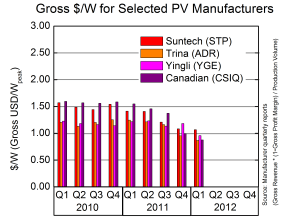
It is interesting to note that the production costs of the major Chinese c-Si players seem to have converged in Q1 2012, perhaps reflecting the growing standardization of equipment and materials for volume manufacturing of c-Si technology.   To date, the most significant driver for the production cost declines of 2010-2012 was the long-term contract pricing for polysilicon feedstock dropping from 80 to 30 $/kg.  Non-silicon costs and efficiency improvements would also work to move down $/W figures, but polysilicon pricing  accounts for most of the production cost decrease.
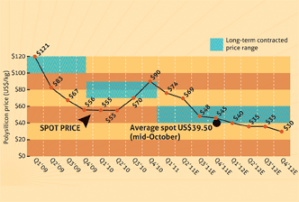
Even with polysilicon prices down from a peak of >100 $/kg to 23 $/kg today, the suppliers mentioned here have all been pushed to negative margins.  One of the biggest challenges for c-Si in the next year will be manufacturing higher efficiency products (such as Yingli’s PANDA) while also slashing non-silicon production costs.

I can’t wait to see the results of Q2!!

Posted in Data, Solar | Tagged | Leave a comment

Sign the petition!

On May 20, 2012, the first signature was added to a new petition at whitehouse.gov:

We petition the Obama administration to Require free access over the Internet to scientific journal articles arising from taxpayer-funded research.

The petition is part of a wider “open access” movement that has been growing increasingly organized and is receiving increasing media attention.  Supporters of the petition are operating their own website now, and I am enthusiastically in support of opening up to the public the fruits of federally-funded research.

Now, as a recent Ph.D graduate, I know well the joy of having access to a good library system.  Scholarly articles from the early 1900s all the way to pre-printed material can be accessed rapidly, for no additional cost, from any computer on a university network.  Even better, articles that are not immediately accessible can be obtained through interlibrary loans within hours.  Nothing is hidden and everything is accessible – the healthiest way for science to operate.

Outside the university there is only a fraction of the information available.  Now I find myself unable to track through the references on a paper, blocked from digging into the most promising abstracts, and denied access to powerful search engines such as the Web of Knowledge.

Give tax-payers access to the research they paid for!  Sign the petition!

Posted in Uncategorized | Tagged , , , | Leave a comment

Why buy solar modules when you can make them?

Watch out, everyone, there is a new business model in town for solar electricity…

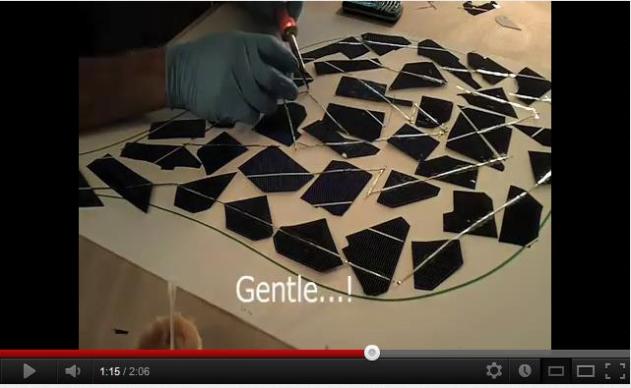
No need to ship around heavy glass panels – just send out bare PV cells and the do-it-yourselfers will grab their soldering irons and stitch the panel together themselves:

Image

These cells look like they are contacted in series.  I count 35 cells, which would be about 12 V max power, depending on how well they survived the shattering.  The smallest cell is maybe 30 cm^2, so we’re looking at 1 A, 12 V.  That’s probably plenty for an iPhone charger.

A little research later I think I can offer a recommendation for TomJDLeaf: make sure the string is at 5 V before hooking up your Apple products.  That probably means two strings in parallel.  Oh and good luck with the current-matching!!

Posted in Solar | Leave a comment

Renewable Portfolio Standards?

Hey, the power is out.  Wait a second, what day is it?  I didn’t know PG&E was into April Fool’s pranks….

Nice going PG&E.  How am I supposed to use my… anything….  At least the gas stove still works with matches.

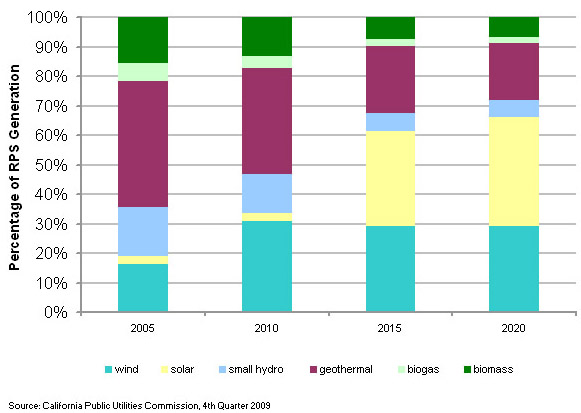
I can’t wait for the California Renewable Portfolio Standards to kick in.  PG&E is sitting at 15.9% renewable electricity – from water and wind… and geothermal?

We’ve got a lot of solar to build by 2015, that’s for sure.  Looks good from here, Gov. Brown!  Oh yeah, and you did OK too, PG&E, except for that bit between 07:29 and 07:46 on 04/01/2012.

Posted in Solar | Leave a comment

Best place for making a racket

I found a great place for playing some raucous snare drum.  Apartment living may have kept me from setting up the full kit, but nothing can stop me from going troubadour.  It makes me realize one thing about living in South Bay: it may be hard to find a place that is quiet, but it’s easy to find a place to be loud!

Posted in Music | Leave a comment

Yeah! Updates and Free Hosting!

So on the inspiration of my lovely lady’s website, I’ve decided to finally update my internet self with WordPress.

I cringe a little bit looking on the old, “Please hire me I’m a grad student” website.  It was kinda fun writing the hmtl with SeaMonkey to build the old page…. but out with the old and in with the new.

Posted in Uncategorized | Leave a comment

Mustang Mileage Data

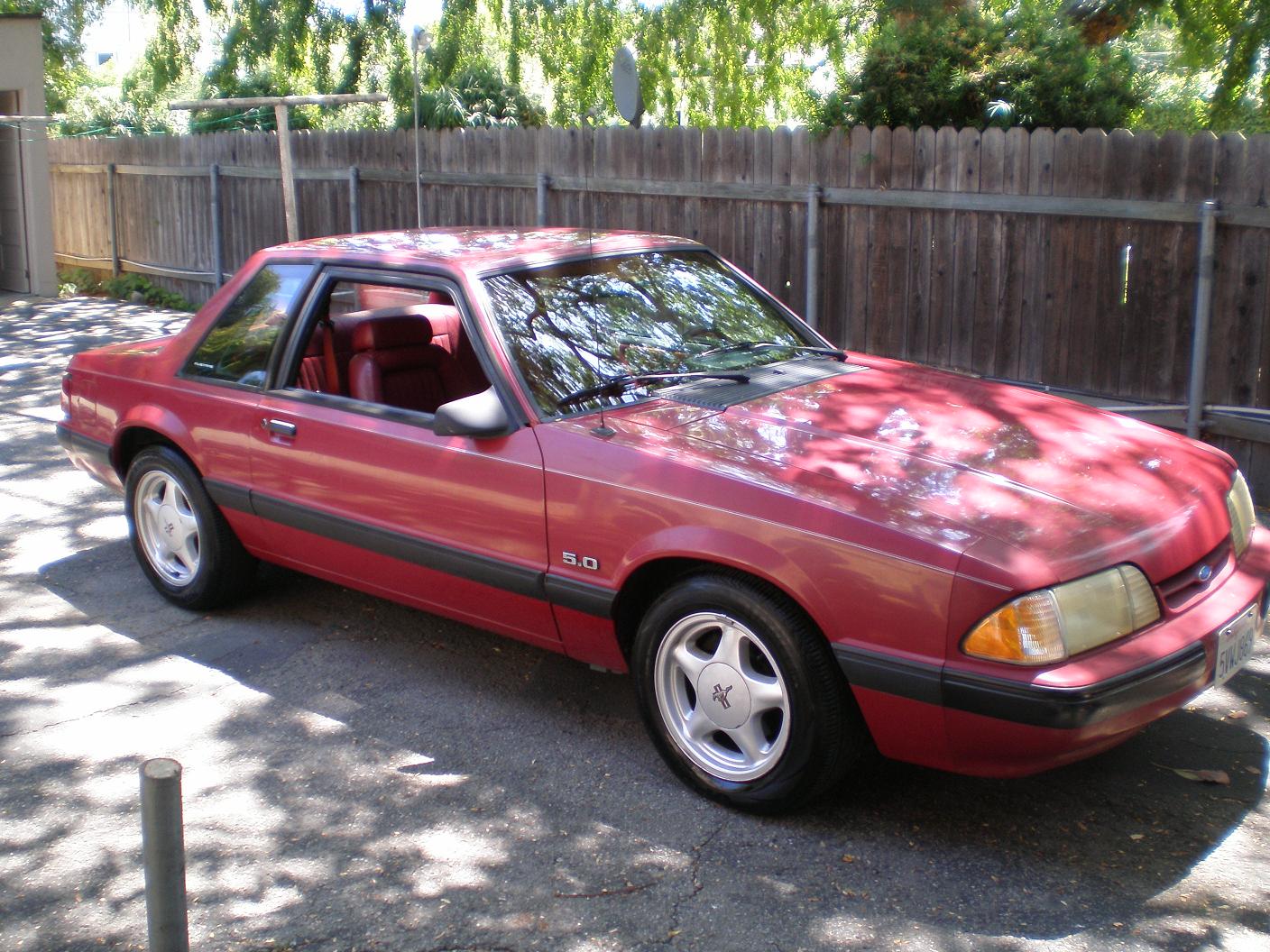
What happens when you give an energy scientist a gas-guzzling car?  Data gathering and analysis is what happens!  I started tracking the gas mileage of my 1991 Mustang 5.0L in 2005, and somehow forgot to stop tracking it.

It was just before my epic drive from Florida to California.  Three days, 39 hours of driving, solo operation, and timed specifically to hit the peak of rush hour on arrival to LA.  I probably wouldn’t make it if I tried to do that again!

Anyways, the interesting thing about gas mileage is that it tracks with lifestyle.  Long trips spike up to highway MPG, but grad student living is all about short trips for tacos and/or solder.

So yes, it’s true, I spend all day furiously working with solar cells, and then drive home at 16 MPG.  But at least it’s above 10 MPG!

Posted in Cars, Data | Leave a comment